
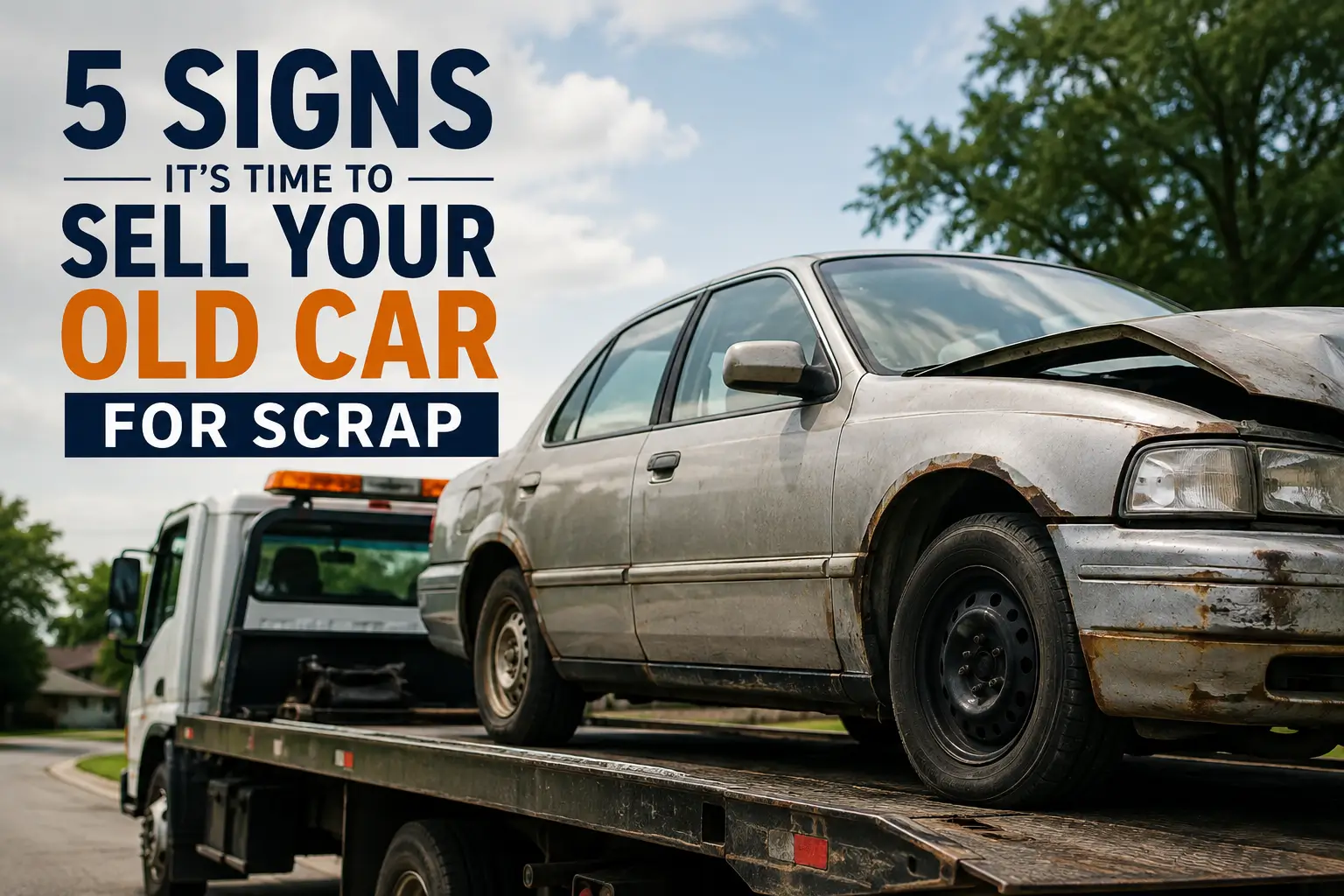
The clearest sign it’s time to scrap your car is when a single repair costs more than half of what the car is currently worth. Mechanics call this the 50% rule, and it’s the single most reliable financial test for the decision. But cost isn’t the only signal. Frequent breakdowns, high mileage, structural rust, and a private sale that goes nowhere are all separate warning signs that point to the same conclusion. Below are five signs to check against your own car, plus what you can realistically expect to get for it in the Orlando area.
The Junk Car Removal Orlando team buys and tows cars across Central Florida every day and sees these exact situations constantly. We fact-checked this guide against current industry repair-cost data.
1: Are Your Repair Costs Approaching Half the Car's Value?
If a single repair quote is at or above 50% of your car’s current market value, repairing it rarely makes financial sense. This is known as the 50% rule, and it’s the benchmark most mechanics and insurance adjusters use when deciding whether a repair is worth doing. For example, a car worth $5,000 facing a $2,800 transmission rebuild is already past the point where most owners come out ahead by fixing it.
Major component failures push most cars over this line fast. An engine or transmission replacement commonly runs $3,000 to $7,000 installed, which on an older car is often close to or above the entire vehicle’s value. Check your car’s private-party value on a site like Kelley Blue Book before agreeing to any major repair, so you’re comparing the repair estimate to a real number instead of guessing.
The 50% rule is a starting point, not an absolute cutoff. A well-maintained, otherwise reliable car sitting right at 50% might still be worth fixing if you plan to keep it for years afterward. A car with a history of recurring problems sitting at 40% might already be a better candidate for scrapping, since the current repair is unlikely to be the last one. Use the number as your first filter, then factor in the car’s overall reliability track record before deciding.
2: Are You Repairing the Same Car Every Few Months?
Needing a repair more than once every 6 to 12 months is a pattern, not bad luck, and it usually means the vehicle’s overall condition is declining faster than any single fix can address. One expensive repair on an otherwise reliable car is normal ownership. Three or four separate repairs stacking up in a single year, even if each one seems manageable alone, often add up to more than the car is worth and signal that more failures are coming.
Frequent breakdowns also carry costs beyond the repair bill itself: missed work, rental cars, and emergency towing all add up. If you’re spending $1,500 to $2,000 or more a year keeping an aging car running, that’s often close to what a modest car payment would cost, except you’re not building toward owning anything newer or more reliable.
3: Has Your Car Passed 150,000–200,000 Miles?
Once a gasoline vehicle crosses roughly 150,000 to 200,000 miles, major component failures in the engine, transmission, and suspension become significantly more likely, even with good maintenance. High mileage doesn’t automatically mean a car needs to be scrapped, but it does mean any major repair estimate should be weighed more carefully, since a second big-ticket failure is statistically closer than it would be on a low-mileage car.
Mileage also affects resale value directly. A high-mileage car is harder to sell privately, and buyers who are willing to consider it will typically expect a steep discount to offset the risk. In many cases, the realistic choice on a 180,000-mile car isn’t “sell privately or repair”; it’s “repair or scrap,” because the private-sale option has effectively priced itself out.
4: Does Your Car Have Rust or Structural Damage?
Structural rust that has eaten through the frame, floor pans, or suspension mounting points is rarely worth repairing on an older vehicle and can make the car unsafe to drive regardless of how well the engine runs. Surface rust (a bubbled spot on a fender, orange freckling on a bumper) is cosmetic and doesn’t affect the decision. Rust that compromises the frame or suspension points does, because welding in new structural metal is expensive and the car’s resale value afterward stays low even with the repair done.
Florida’s humidity and hurricane season add a wrinkle most other states don’t deal with: standing water from flooding can destroy electronics and wiring even in a car with no visible rust damage. If your car was ever in standing water, even briefly, that’s worth factoring in alongside any visible rust, since flood damage tends to cause new electrical problems for years afterward.
5. Is Nobody Making Serious Offers When You Try to Sell It?
If you’ve listed your car for sale and are getting silence or lowball offers well below what you’re asking, the private market is telling you the car’s real value has already dropped to close to its scrap value. This is one of the clearest real-world signals available, because it reflects what actual buyers are willing to pay rather than a number from a valuation guide. Spending more time trying to force a private sale on a car the market has already priced as scrap usually costs more in time than it gains in extra dollars.
At that point, the car isn’t worthless; it still has real value in its metal and any usable parts. It’s simply moved from “sell as a used car” to “sell as scrap,” which is a different transaction with a different, faster process.
A quick way to check this without wasting weeks on a private listing: post the car for sale for one week at a fair asking price. If you get no serious inquiries, or every offer comes in well below what a scrap buyer would already pay, that’s a fast, low-effort way to confirm which category your car falls into before committing more time to a private sale.
How Do I Sell My Car for Scrap in Orlando?
Selling a scrap car in the Orlando area is usually a same-day process: you request a quote, confirm your car’s year, make, model, and condition, and a buyer picks up the vehicle with free towing and pays cash on the spot. Junk Car Removal Orlando handles this exact process for scrap and non-running vehicles across the metro, including free pickup so there’s no cost to you for getting the car off your property.
If you already have your title and ID ready, most pickups can be scheduled and completed the same day. If your title is missing, a licensed buyer can walk you through the alternative documentation Florida accepts before pickup, so a lost title doesn’t have to delay the sale.
Before the buyer arrives, it’s worth removing your license plate and any personal items from the car, since the plate stays registered to you until you surrender it or transfer it to another vehicle. Taking a few photos of the car’s condition beforehand is also a good habit; it gives you a record of exactly what was picked up, in case any question comes up about the vehicle’s condition at the time of sale.
Wondering what your car is worth before you decide? Get your free, no-obligation cash offer from Junk Car Removal Orlando today. Most vehicles are picked up with free towing the same day, whether you’re in Kissimmee, Winter Park, or anywhere else in the Orlando metro.
Is it better to repair my car or sell it for scrap?
If a single repair costs 50% or more of your car’s current market value, selling it for scrap is usually the better financial move. If the repair is well under that threshold and the car is otherwise reliable, repairing it is typically the smarter choice.
How do I know if my car has passed the point of no return?
A car has usually passed the point of no return when a major repair (engine, transmission, or structural) costs close to or more than the car’s value, or when repairs are needed every few months instead of every year or two. At that point, the car is costing more to keep than it’s realistically worth.
Do I need a running car to sell it for scrap?
No, scrap car buyers purchase non-running vehicles every day. A car that won’t start or drive is still worth cash based on its scrap steel weight and any usable parts, so there’s no need to get it running first.
Will rust always mean my car is worth scrapping?
Not always surface rust on the body is cosmetic and doesn’t affect the decision, but rust that has eaten through the frame or suspension mounting points usually does, since it’s expensive to repair safely and lowers resale value even afterward. If you’re unsure which type you have, a scrap car buyer can assess it during your free quote.
How fast can I sell my car for scrap in Orlando?
Most scrap car sales in the Orlando area are completed the same day, from initial quote to cash payment and pickup. Same-day service typically requires having your ID and title, or an accepted alternative document, ready when the tow truck arrives.
Is it worth getting multiple quotes before scrapping my car?
Yes, cash offers for the same car commonly vary by a few hundred dollars between buyers, so comparing at least two quotes before scheduling pickup is worth the extra few minutes. This is especially true for trucks and SUVs, where the price spread between buyers tends to be largest.